Showing posts with label Biophilic. Show all posts

Wednesday, December 14, 2016

More Green Space in Chicago!

Photo by Justin Breen The Field Museum

Chicago continues to inspire!!

First I found out about their bird friendly skyscraper design and then next it was Milwaukee Avenue Green Development Corridor.  After that I read about all these other green nature initiatives that had been happening:

 - City Hall's Rooftop Garden
- the Green Roof Grant Program
- Nature and Wildlife Plan
- Green Alley Program
- Urban Forest Agenda
- 606 (green line)
- Chicago Botanical Garden's "Horticultural Therapy Program"
- Burnham Wildlife Corridor

and now it's Northerly Island!

They are rejuvenating the island with 400 trees and 12000 shrubs by 2017, which will add a more diverse habitat and resting spot for birds.

From DNA info "Northerly Island Is Now A Bird Paradise With 250 Species And Counting" by Justin Breen:
Stotz said that Northerly Island's new look has saved the lives of countless birds. The island used to feature only dry grassland, which kept birds from landing there. Instead, they would fly from Lake Michigan into the city and often crash into McCormick Place. 
"Northerly Island has become an important habitat for preventing birds from hitting McCormick Place," he said. "There used to be no place to stop, and now there is."

Read more about it at DNA Info article and "Northerly Island Reopens" by The Field Museum, Joshua Engel.

Another great organization in Chicago is Open Lands which "has helped protect more than 55,000 acres of land for public parks and forest preserves, wildlife refuges, land and water greenway corridors, urban farms, and community gardens."  Currently they are working on a green vision for some empty industrial sites along Lake Calumet.

Very inspiring!!


Wednesday, October 19, 2016

Green Roof in Ottawa

Image from Google Earth

From Metro News:

Ontario Completes Ottawa Courthouse Green Roof (2012)
"A new green roof at the Ottawa Courthouse will reduce energy costs, improve air quality and help Ontario meet its long-term energy conservation goals.  (The roof's green space is bigger than four hockey rinks put together, or one football field.) 
The Ottawa Courthouse's green roof is a living landscape that supports 60 varieties of plants and protects the building's structure from the elements. There are 26 separate green roofs spanning multiple elevations, for a total of 70,000 square feet of green space that will help keep Ottawa's air clean. 
While a conventional roof lasts only 20 to 25 years, green roofs last at least twice as long. The new green roof will save $23,000 a year in energy costs by reducing summer cooling and winter heat loss by 26 per cent."

I found this after reading about Ottawa investing in solar energy on their municipal buildings:

Ottawa gets green with solar energy project (Metro News, September 2016)

"Eight municipal buildings now equipped with solar panels."


Monday, September 26, 2016

Via Verde project in Mexico City (citizen-led)


Have you seen this?  Even just looking at this image makes me feel calm!  I'd love to drive on a highway like this - imagine if Toronto did this to their highway downtown!

Great facts about the project:

- 40,000 meters of roadways and concrete pillars will be covered
- will fight pollution, beautify the city and decrease stress levels of motorists
- the green walls will generate oxygen, absorb pollutants and moderate traffic noise
- an automated irrigation system supplied by rainwater will be used
- the project is being funded by private donors, government and advertisers

From Upworthy and Now This:


Wednesday, August 31, 2016

More about SNAP - Bayview Glen (TRCA - Toronto)

A


From SNAP - Bayview Glen

On September 28 the Markham’s City Council approved the proposed design concept for Glencrest Park and endorsed it for implementation in 2015-2016.

The updated Glencrest Park will include a modern playground and a shade structure near the entrance to the park at Ladyslipper Court and amenities such as a labyrinth, a meditation garden and an open play space. A proposed trail system will connect key features within the park and will provide an off-street pedestrian linkage between Laureleaf Road and Ladyslipper Court.

The re-creation of the valley feature with raingardens will transform the landscape within Glencrest Park from maintained turf to a rich mosaic of ecotones, creating a naturalized landscape and supporting the attenuation of stormwater runoff. A looped trail system of approximately 600 m surrounding the raingardens and the mediation garden will afford opportunities for walking and jogging within a naturalized landscape setting. Tree planting is proposed extensively throughout the park with the intent of expanding the tree canopy and promoting evapotranspiration.

Glencrest Park has received a $60,000 grant from the RBC Blue Water Project. This grant will support the implementation of the raingardens and tree planting and creation of a naturalized landscape that enhances the evapotranspiration and infiltration of stormwater.

Link to Map

Saturday, February 6, 2016

Urban Foxes


Finally after fifty or more years, Lebreton Flats is being redeveloped.  I've always wondered about the area and all that green space so close to the urban core.  When I was thinking how great it would be for the city to have an Urban Ecology Centre centrally located (when I started my new career in 2011) I thought something off of Bayview would be perfect.  It would be close to the river, along a major corridor (that fauna may naturally follow) and there was all that open green area.  Just a beautiful spot and vista.

I started thinking about this area again today when my friend posted about seeing an urban fox in Chinatown.

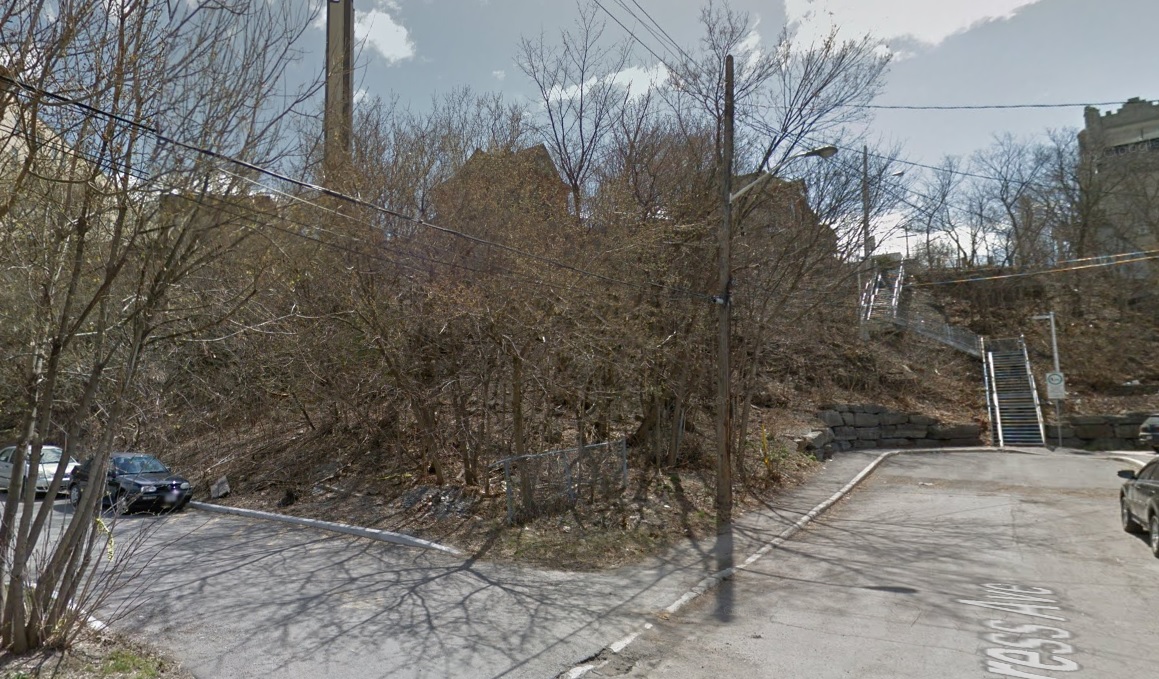
"We just saw a fox trotting at a fast clip around Primrose and Empress in Ottawa's Chinatown tonight. It looked she/he was heading towards Somerset before he/she ducked between some buildings. Who knew we'd find a fox in Centretown?"

It would be an amazing sight to see in the evening.  On the Urban Wild Walks we were told that there was a fox denning in the Macoun Marsh area (which my spouse saw this week cross St. Laurent late in the evening) and our Animal Tracks tour leader also found a fox den (although empty at the time) up in Rockcliffe Park (the official park where the pavilion is, not the neighborhood "Rockcliffe Park").  But are urban foxes common in Canada?  I knew they were in parts of the U.K. as I have read and watched documentaries on London's urban foxes.

"London is unique among western European capitals in that it has a fox population of any great size, concedes Trevor Williams, director of The Fox Project, which maintains a wildlife information bureau." (The Star, David Hewitt, 2012) 

"Stephen Harris, an expert on urban foxes at Bristol, says no reliable figure has ever been calculated, although he once estimated the number at 5,000 to 6,000 for London's boroughs." (L.A. Times, Christopher Werth, 2014)

London has no urban raccoon or skunk population (unlike here in Canada) but it does have increasing numbers of badgers, weasels, hedgehogs and other small nocturnal visitors.  Each creature has different territory size and the overlap of these territories may vary along with when each is on the prowl.

But back to Ottawa - pictured above and below are the areas that connect Lebreton Flats area to Chinatown (above the ridge) along Empress and Lorne.  There is a very scrubby areas along the ridge in both places which could offer urban mammals including foxes some cover and some easy accessible corridors to explore more urban territories above the ridge.


The pink area in the map below is the Saint Vincent hospital property and Somerset is south of this site.  The orange arrow pointing in the direction the fox was going.


Lebreton Flats (before current redevelopment started) had some great wild green and rocky areas that could offer den locations.  The fox at Macoun Marsh is found in the rocky area beside the marsh.  The den in Rockcliffe Park was dug in soil along the slopes down to the river.

Red foxes are a rare sighting but part of the reason for this is that we keep different hours.  Foxes are nocturnal like our skunk and raccoon neighbours but this still doesn't explain why they are rarely spotted here as I've definitely seen the other two creatures from time to time, so why not foxes?

They have been seen in the Fletcher Wildlife Gardens and the volunteers there estimate that there is just one family that uses the territory.  FWG's webpage indicates that despite being nocturnal, foxes will hunt during the day in the winter but this area with its fields, shrubs and woods is very different than an urban landscape. I'm guessing that urban scavenging is still best done at night when the city is more quiet.  Foxes are solitary and, even in areas where they are known to dwell, are rarely spotted.

The Toronto Wildife Centre states that foxes are more common than realized and can be found near ravine systems, large grassy fields and large parks where small mammals are plentiful (Toronto Wildlife Centre) and the MNR backgrounder states that foxes do den near human areas and are commonly found in many large urban centres in Ontario.

Charlottetown, however is one Canadian city where fox populations are similar to the London U.K. situation where "human-fox interactions are commonplace".  An urban research team studying these foxes "found 89 dens in Charlottetown". (Saltscapes)  Many residents of this city have spotted foxes - they have become a common sight unlike cities here in Ontario.

So my conclusion would be that they are more common than we realize but not as common as raccoons and skunks, which is probably a good thing!

Other great tidbits:
  • Foxes are omnivorous eating small rodents, frogs, insects, birds, snakes, acorns, grasses, corn, fruit and berries. (MNR)
  • They use abandoned groundhog burrows as dens. (Lethbridge College - the link for the LC Virtual Wildlife Project - digital Hubbard Collection is not working anymore)
  • Foxes can travel up to 10 km a day.  (Lethbridge College, Virtual Wildlife Project - Hubbard Collection)  It's 4 km from Lebreton Flats to the Fletcher Wildlife Garden.
  • They are extremely nimble - much more likes cats than dogs in this trait and can even climb trees. (FWG)
  • And let us not forget this brilliant fox who found a comfy resting spot for a morning! (#busfox)


Some other great urban mammal/wildlife posts:

Urban Crows (and supportive urbanites) (May 2011)

Helping Urban Skunks (March 2012)

Urban Coyotes (Feb 2012)

Urban Bats (June 2013 and August 2012)

Urban Fishers (Feb 2013)

Tuesday, December 15, 2015

Capital Urbanism Lab - New Season of Lectures!


Mark Your Calendars:

As a follow up to the Urban Ecology lecture by the Capital Urbanism Lab, the NCC will discuss specific biophilic city topics in 2016:

The Urban Forest - Tuesday, February 16, 2016 - 06:30 pm (rescheduled)

Planning Communities Near Parks - Thursday, April 07, 2016 - 06:30 pm (cancelled)

Creating a River Culture in the Capital - Wednesday, May 04, 2016 - 06:30 pm (cancelled)

Tuesday, November 10, 2015

Another great public indoor greenspace in Ottawa


New Currency Museum (Bank of Canada)
Bank and Wellington - access from Sparks Street

One of the indoor atriums that I've always found lovely is the Bank of Canada Garden Court Atrium (that was accessed from the Spark Street side).  Now that the buildings are being renovated, I was wondering what would happen to it.  It was such a lush, relaxing spot for people to enjoy - especially in the winter!  Remember the space where you could see the Yap stone?  It was also a popular spot for wedding photos during the winter months.

The Currency Museum blog explains that the new museum will be in the lower level but it doesn't provide information on how the main floor will be transformed.

From the website: "It is there, beneath the plaza at Bank and Wellington Streets, that the new Museum is planned to be - taking up the east end of the huge former cafeteria including the glass ceilinged ‘waterfall room’, and the large common area where staff events took place as recently as last summer."

The courtyard space on Bank Street looks really wonderful and provides some great public seating - I was wondering what those strange imposing triangle structures they were building in that space were.


Sadly upon doing some further online research, it seems that the Bank of Canada IS considering eliminating this atrium for reasons of safety and space requirements. This 2014 online article from The Cultural Landscape Foundation shares the full story and provides some thought on the need to save this atrium and preserve the architectural integrity and history of the design.

Courtyard Image from Museum website

Image (top) from Oh!Gravity blog

Sunday, November 1, 2015

Indoor Atriums in the City (Ottawa)

Here is a list of great atriums to visit in the winter to get your kick of green and light (especially if it's a sunny day!):

(Temporarily Closed) Sunlife Financial building (99 Bank Street)

There are many entrances to this atrium: through the Starbucks, from all street sides including O'Conner and from its official address on 99 Bank.  Depending on where you enter head towards the center where you'll find a large courtyard area including an elevated spot with a waterfall which gives visitors a great respite from the usual city experience (noise, grey, packed sidewalks).  Great retreat in the winter but it does get busy during lunch hours.

Photo link


Minto Place atrium (407 Laurier Avenue W.)

This indoor spot is well-known for its green living wall.  A popular place with the downtown lunch crowd (so again it can be quite busy mid-day) who likely come for the light and airy peaceful space.  Come on a sunny day as you will get the maximum benefit from the vast glass ceiling and enjoy the large tropical trees placed strategically around the courtyard.  There is access from all sides of the buildings and the atrium is found in the west end.

Photo link


C.D. Howe building (240 Sparks Street)

Inside this popular seventies mall (who remembers shopping at "240 Sparks" and/or going to the movie theatre here?) you can find a small courtyard downstairs with tables nestled beside living trees.  It has undergone a renovation in the past couple of years but still includes both the "Bright" Tree Court and a "Relaxing" Waterfall court.  Some of the anchor stores have moved out including L.C.B.O. and Holtz.  There is access from all sides including Queen Street, Bank Street and even along the Sparks Street mall.  It also has a green roof that has been opened to the public on past Doors Open events.

Photo link

What other favourite green spots do you have in Ottawa to visit in the winter?

Thursday, October 15, 2015

Greenhouses in Ottawa (to get your plant fix this winter)


As the weather turns colder and winter starts whispering about its arrival, thoughts turn to warmer climes and tropical getaways!  If you can't get away this winter, here are a couple of places to visit to warm yourself inside and out.  The tropical floral scents alone can elevate your mood:

Tropical Greenhouse (Arboretum) - Free Admission
Maple Drive

This greenhouse "has been recently renewed and replanted with a larger, more diverse collection. The elegant octagonal structure was originally built at Major's Hill Park in downtown Ottawa and moved to the Farm in 1938 to be used for horticultural research. Now a heritage building, it became a tropical garden open to the public in the 1970s."

Open Monday to Friday, 9 am to 4 pm; Sunday 10 am to 4 pm; closed Saturday.


Carleton Greenhouses - Free Admission
Nesbitt Biology Building

This facility is used for research, teaching and display to the general public. The greenhouses hold comprehensive plant collection of several thousand specimens ranging from popular crop species such as corn, soybean, papaya, banana and sugarcane to some quite unusual desert specimens.

Open Monday to Friday, 9 am to 4 pm

Oldest plant: Ponderosa Lemon (California hybrid), 33 years old
Biggest flower: Sun and Sand Hibiscus (Australia): 22 cm wide
Tallest plant: Chorisia speciosa (floss silk tree): 7 metres


Rideau Hall Greenhouses - Free Admission (when open to the public)

The Governor General's greenhouses are occasionally open to the public during special events (not during regular tours).  They were open as part of the Savour Fall event this year (2015) and in 2013 they were open as part of a Garden Gathering event.  Perhaps they might see the benefit of offering a weekend "doors open" to the public in the dead of winter?  ;  )


I'll also be adding to the blog some great indoor atrium recommendations that are accessible to the public - stay tuned!

Wednesday, September 30, 2015

Two Cool online resources by Nature Canada!


Found these online resources last month on Nature Canada website:

Nature Hood virtual tour:

This resource highlights all the great spots for bird viewing in the Lac Deschenes area including waterbirds, shorebirds, aerial insectivores and passerines. It provides indepth information on all the popular spots on both sides including Bates island, Baie Simard and Mud Lake!  Check it out here.

Nature Hood App:

Nature Canada is also encouraging Ottawa residents to become citizen scientists by mapping sightings of wildlife in public spaces!  This includes birds, mammals, herptiles and even insects.  It has a great glossary to help when reporting a sighting and there is also the opportunity to virtually explore the entries that are already there on the map.  This would be fun for a family outing.  Learn more by visiting the website.

And speaking about the Ottawa River - Ottawa Riverkeeper has created a virtual tour for the Voyageur Pathway.


Saturday, August 15, 2015

Urban Ecology Lectures (Ottawa)


This year the Friends of the Farm offered various Tree Walks in the Arboretum.  I was really thrilled to hear how popular these free tours were - with up to 100 people attending!  Some of the walks planned this year were on traditional topics including Flowering Trees, Tree Identification, Maple Tree Species and Fruit Trees while others introduced newer "urban ecology" topics such as:

BIRDS AND THE URBAN FOREST - Sunday, May 17, 2015
Tour leaders: Rachelle Lapensee and Owen Clarkin

From the website: "Birds and Trees are inextricably connected. Trees provide food and shelter to many species of birds, while birds act as agents for seed dispersal and greatly influence the relationship of trees with their insect and fungal pests. Come for a tour of the majestic trees at the Dominion Arboretum during the busy spring birding season, and learn more about Ottawa's birds, trees, and their relationships with each other."

TREE FORMS AND SHAPES IN WINTER - Sunday, November 15, 2015
Tour leaders: Owen Clarkin and Bettina Henkelman

From the website: "When the leaves fall, serious tree-watching can begin. Firstly, trees that were often obscured behind the leaves of others suddenly are visible; this is especially true of evergreens. Secondly, individual tree species tend to grow in recognizable patterns, and for deciduous trees this is best observed in winter. Techniques for how to learn tree recognition from a distance will be explained."

Image from Friends of the Farm newsletter

Tuesday, March 10, 2015

12 Principles to help Plan, Design, Plant and Manage an Urban Forest


Trees in the Townscape – A Guide for Decision Makers

The Tree and Design Action Group shares the collective vision that the location of trees, and all the benefits they bring, can be secured for future generations by influencing the planning, design, construction and management of our urban infrastructure and spaces. They have identified 12 action-oriented principles which can be adapted to the unique context of a town or city to provide a roadmap for trees in a 21st century context.

Found here:
https://landscapeiskingston.wordpress.com/2015/02/17/trees-in-the-townscape-a-guide-for-decision-makers/

Sunday, January 11, 2015

NCC Urbanism Lab: Ecological Urbanism (Ottawa)


Just found this on the NCC website:

The National Capital Commission (NCC), in partnership with the Embassy of France, is pleased to present a stimulating discussion about ecological urbanism. This is an approach that "considers the city with multiple instruments and with a worldview that is fluid in scale and disciplinary focus. Design provides the synthetic key to connect ecology with an urbanism that is not in contradiction with its environment."

The panel will consist of the following experts:


The discussion will introduce the concepts of ecological urbanism as a philosophy and theory, as it is known in the Canadian context. Our French guests will then share their knowledge and experience from a theoretical and practical perspective, including the notion of éco-quartiers and green architecture. As planner and steward of Canada’s Capital, the NCC strives to incorporate innovative thought leadership to continue to creating a truly world-renowned capital.


NCC Capital Urbanism Lab Event was held December 2014.  (Too bad I found out about this event after the fact!)

Wednesday, December 10, 2014

10 Native Trees for Ottawa (by Diana Beresford-Kroeger)

List of 10 Native Trees recommended as substitutes for the Ash, Fraxinus species

by Diana Beresford-Kroeger

1. Oak, Quercus 

Q. macrocarpa is called the Bur Oak. It is a native oak, an edible species of the landscape of the City of Ottawa. This oak or the white oak, Q. alba, or the northern red oak, Q. rubra, will grow rapidly and form large canopies. These trees require immense amounts of atmospheric carbon dioxide to grow. They are local trees that will reverse climate change, reduce pollution and skin cancers. They have the strength to withstand ice storms and heavy snow. They are also extremely drought resistant. 

2. Honey Locust, Gleditsia triacanthos 

The natural form of honey locust is extremely healthy and hardy in city traffic conditions. It is almost resistant to disease infestations. It is drought resistant and it fixes its own nitrogen from the atmospheric nitrogen dioxide and from the soil. The locust will reverse climate change. The canopy of which produces a high filtered light for city gardens. The tree produces edible beans which can be ground as flour and added to other grains to make flour in various proportions. The flowers of the locust feed beneficial insects which in turn act as predators reducing the need for pesticides. The tree is also an 'Escape tree' for birds from city cats and racoons. 

3. American Basswood, Tilia americana 

This local native tree has flowers in June to July which are immensely fragrant. The lactone chemistry in the aerosols that are produced are beneficial to human health. The tree is the greatest feeding tree in the entire world for beneficial insects. Basswood honey is the best on the continent. This tree helps the bird populations to increase and produce more viable eggs in the spring which in turn reduces the need for pesticides. The Basswood leaves in its canopy combs the city air of its particulate pollution which is a leading cause of heart disease in the asthmatic. 

4. Eastern White Cedar, Thuja occidentalis 

Ottawa is blessed with native populations of an evergreen tree called the cedar Thuja occidentalis that the local native people called "The Tree of Life". There are golden, tall, weeping and fastigate forms. The trees’ leaves have glands on the tips of the leaves that can be easily seen by the naked eye. These glands in hot humid air release an aerosol medicine into the air that regulates the beating heart and is antiviral. The tree is also drought and fire resistant. It feeds birds and protects them in the winter adding 2 degrees centigrade to their body heat within the shelter of this evergreen. 

5. Black Walnut, Juglans nigra 

The walnut tree is a medicinal tree. It produces anticancer bio-chemicals both in the mature foliage and in the nuts themselves. Ottawa has a very high cancer rate. This tree would act as a shield for this, most especially for the children of the city who are most vulnerable because of their high metabolic rate when they are in growth spurts to adulthood. Pound for pound, the flesh of the walnut is equal in protein to the best black Angus t-bone steak. The tree is strong and wind resistant. It also has a wide canopy which reduces summer cooling costs. The wood of this tree is one of the most valuable in the world. A well grown Juglans nigra ‘Thomas’ in the city will pay for a grandchild's university education, quite easily. A full canopy of black walnut generates chemical aerosols which will neutralize toxic benzene from the traffic. 

6. Fir, Abies 

All of the fir are drought resistant. They will withstand heavy snow loads and ice. The conical form of anatomy of the tree helps them to stand straight, also, in high winds. The branches have a special form of buttresses built into them. These trees guard all the waterways, canals, lakes and river systems helping to purify potable water which is increasingly an issue for cities and urban areas across the world. The chemistry from the needles or leaves produces airborne aerosols that are antiseptic and antibiotic. These trees act as air cleansers and as deodorants on a massive scale. This super clean air is a health benefit to the city of Ottawa and to the surrounding area. There are two trees of choice, the Abies balsamea, known as the balsam fir, balsam, Canada balsam or the eastern fir. This tree is native to the city of Ottawa. The other is the Abies concolor known commonly as the white fir or white balsam. This is a Canadian species, the best cultivar for shape, form and drought resistance is A. c. ‘Candicans’. This tree is also a songbird shelter and escape route for predation. 

7. Spruce, Picea 

The white spruce is the workhorse of Canada. It has a long and important history on the landscape especially for Ottawa, where it grew on rocky areas overlooking the Ottawa River. It was one of the trees with long tracheids that made pulp which made paper that made money for the lumber barons. Their names can be found inscribed in Rideau Hall, residence of the Governor General. The tree is famous for its pharmaceuticals, one of which reduces blood pressure the other is anti-anginal and helps the heart itself to beat. This is a medicinal tree. It is evergreen and can withstand snow loads and strong winds. The resin of the tree helps all flying beneficial insects especially the honey bee. This tree helps to stop Honey Bee Colony Collapse. The best spruce for Ottawa is the common, native white spruce, Picea glauca. It is known as the skunk spruce. The latter is a common name given when the science of the aerosol medicine was not appreciated by the pioneers, but was used by the aboriginal medicine men for 40,000 years on this continent as a medicine. 

8. Catalpa, Catalpa speciosa 

The catalpa is the most spectacular flowering tree for the city of Ottawa. The bloom clusters are bigger than a man's head. The flowers are white and fluorescent purple. The long beans hang in tassels into the fall and winter. They are the food of the red cardinal birds who love to split open the bean and eat the seeds. This tree is suited to the calcareous soils of the city of Ottawa. The tree can be easily grown, it is disease and drought resistant. The horizontal limbs and main branches in the winter are flexible and will withstand heavy ice and snow. The blooms are like orchids and attract butterflies. The author, Diana Beresford-Kroeger would like to see these trees widely planted in the downtown area as a tourist attraction for a festival of their flowering in June to July. Such a tree allée would also help to maintain clean air as the huge leaf can comb air pollution of 2.5 micron sizes, reducing it for easy breathing. It is a North American tree. Its origins are unknown on this continent. 

9. Hickory, Carya ovata 

The Hickory trees that were cut down for the building of the city of Ottawa were Carya cordiformis. The tree is also known as the Bitternut Hickory, Bitternut, Swamp Hickory and by the farming community as Pignut. It is not known if other members of this family were present at the time. They may have been present because the aboriginal people often planted nuts. These trees would have been Carya ovata, the Shagbark Hickory, the antifamine trees. The Hickory is unique to the continent, except for China. It grew to enormous proportions here. Fingerprint boles account for circumferences of 18 feet on shallow soils. The Hickory is a feeding tree for birds, man and mammals. It is also a butterfly tree, used in a butterfly’s continental migration. This tree can be planted for a public park or a larger garden. In the last ice storm this Ottawa tree species was badly damaged. It needs to be replaced, also. 

10. Cucumber tree, Magnolia acuminate 

The Cucumber tree and all the other species of trees that are endangered in Canada could go on a long list. People who are interested in preserving the native heritage and stories of Canada should grow this magnificent Canadian tree. The tree produces a unique cucumber style fruit. From this fruit the frost opens the seed cases and dangles a red seed by a white thread. Birds love these rich seeds. The flower is like a steel grey tulip which is produced at the end of May. From this tree the aboriginal people made anti-malarial medicine. They made dugout canoes for inland travel on their water highways and they carved death masks from its sacred wood. These masks had an important ceremonial function. The cucumber tree is almost extinct. The City could help in a recovery program for its new World Heritage Site of its canal system. Then these trees could be enjoyed by everyone again. They were a waterway tree.

Found on Ecology Ottawa website (October 2013)


P.S. Check out my latest "urban wild" nature blog: Wild. Here.
(2017 update)

Thursday, October 9, 2014

From Architecture Design: Patterns of Biophilic Design


Happy to see architects debating the benefits of biophilic design!

From the Architecture Design website:

"American sustainability consulting and strategic planning firm Terrapin Bright Green has released a white paper that promises to guide building designers towards more environmentally connected outcomes...  The Terrapin document goes further than just abstract observations however, and offers 14 building design interventions that can be incorporated to facilitate this human connection to nature through built form."
The 14 interventions are:
Nature in the Space
  1. Visual Connection to Nature
  2. Non-Visual Connection to Nature
  3. Non-Rhythmic Sensory Stimuli
  4. Thermal & Airflow Variability
  5. Presence of Water
  6. Dynamic & Diffuse Light
  7. Connection to Natural Systems
Natural Analogues
  1. Biomorphic Forms & Patterns
  2. Material Connection to Nature
  3. Complexity & Order
Nature of the Space
  1. Prospect
  2. Refuge
  3. Mystery
  4. Risk/Peril
Read more here: Architecture Design.
Photos from Architecture Design

Wednesday, August 13, 2014

an urban meadow in Ottawa...


One of the inspirations for my career change was a presentation I saw in 2010 by Mathis Natvik on "urban meadows".  The presentation was for the Ottawa Field Naturalist Club and it was held at Fletcher Gardens.  I was enamored with the idea of urban meadows and attracting more song birds to the downtown areas.  He presented a great case (as part of his Master's thesis) and was hoping to work with the City of the N.C.C. to do a pilot project here.  Unfortunately it never happened.

For the presentation he talked about the decline of wildlife including song birds and other pollinators and how an urban meadow could be located along the parkway or as a replacement for an expanse of lawn as part of an office campus.  Ottawa's a perfect opportunity with Tunney's Pasture, Lebreton Flats and parkways along most of the Ottawa River.  It would just require choosing an area (which could already be a meadow) and then converting it to native meadow species so that more native habitat could be available for wildlife.  He suggests a 90% native species cover as shown below. Ottawa could even consider the Agriculture Farm - convert some of this farm area back to native species.

I've shown the above image of the Prenzlauer Berg District in Berlin (Photo by Westrich/laif/Redux) before as I couldn't imagine anything more beautiful in a city than a field of wildflowers that you could sit in.  Having seen the bobolink near the Aviation Museum, it makes me wonder again, could this be possible?  Wouldn't it be amazing to try out a pilot project and provide some alternative habitat for this endangered species where it wouldn't conflict with the needs of farmers?  We don't know if it is possible but wouldn't it be amazing to see if it was?


*Three bottom images from Mathis Natvik of Natvik Ecological in Guelph.

Friday, June 27, 2014

On a quest to find the Urban Bobolink (Ottawa)

As mentioned in a previous post, I had read about sightings of bobolinks by Dave Collyer from an online post of Manor Park News in 2006 and I was wondering if it was still around.  Pretty amazing sighting of this grassland bird in a more urban setting if it is still here!

I thought I heard it on Monday in the field between the Rockcliffe Parkway and Sandridge Road (there's a path down the middle of the field for dogwalkers).  Using my binoculars I spotted a black bird with unusual markings in the top of a dead tree on the edge of the field close to Sandridge and Placel but it was a faint shadowed view through my binocular lens. I had no camera that day to take a picture and confirm the sighting.  

I went out with my camera today and couldn't find it in that field.  Was wondering if it was in another field close by (or perhaps up at the old Rockcliffe Base?) so I went to the Airport-Marina Road and I ended up finding it in a narrow strip between the Aviation Pathway and the Rockcliffe Airport fence line.

WOW.


FOUND.

Thursday, February 27, 2014

Suburb Re-Do

Images: Sherwood Eng, Washington Edu, Seattle PI, Mithūn Arch.

From Ecobuilding Pulse:
"Revitalizing and rethinking suburban developments offers a wealth of opportunities to builders and architects, says Ellen Dunham-Jones, who is overseeing Sustainable Communities for the Hanley Wood Sustainability Council.
A lot of your work focuses on the suburbs. What are the opportunities there?
The opportunity is that we get a do-over. We built so much, but no one was thinking about environmental issues, especially when it came to the immediate postwar buildings. We drained wetlands. We built with excess. Now that so many of those properties are failing or underperforming, we have a great opportunity to redevelop them into more mixed-use, urban places, or to regreen spaces where we never should have built in the first place.
What do you mean by “regreen” them?
In some cases, especially if there is a slow market, it makes the most sense to simply tear a building down and replace it with a park. Sometimes it means reconstructing wetlands or daylighting creeks that had been put into culverts under parking lots, or putting in community gardens. Outside of Minneapolis in the low-income suburb of Phalen, there was a big strip mall built in the 1960s. It was built before the Clean Water Act, when it was perfectly normal to drain wetlands and put a culvert under the parking lot. The site also happened to be on a major migratory route. Well, the strip mall died and so did the culvert. People at the University of Minnesota’s landscape program made a case for reconstructing the wetlands. They built a beautiful lake and created lakefront property that attracted the first new private investment in over 40 years, which also happens to be next to a big public housing development. This helped trigger improvements to the public housing. The dead strip mall was bringing property values down. So, regreening the space served multiple purposes.
Another thing that’s happening is the daylighting of creeks. One of the most dramatic examples is the Northgate Mall in Seattle. The project has received a lot of press because it features new housing and senior housing on the sides of Thornton Creek, which used to be a culvert under the mall’s parking lot. Now it’s an amenity for housing, the headwaters of a major stream, and can handle the area’s flooding."         (Image: Lisatown - Inspirational Wall)
From Ecobuildingpulse.com By Katie Weeks

Friday, January 3, 2014

Wildflowers of Detroit (Kickstarter Project)


Found this great kickstarter project from 2011.  They wanted to do ground source mapping of the return of wildflowers to the City of Detroit due to the increase of abandoned lots.  How interesting!!

Here is an Huffington Post article on the project: Wildflowers of Detroit Smartphone App

More information from the website:

Wildflowers of Detroit ??

One pervasive vision of Detroit is its ruins - the monolithic hulks of an industrial era gone by, documented in striking photographs and tales of urban exploration. Missing from this narrative is the other side of the coin.  In place of those decaying buildings grow plots of wildflowers and wildlife. After knowing these secret gardens and hidden blooms, we feel this crucial story needs to be told.  Thats where you come in.  Wildflowers of Detroit is a community technology project for cataloging wild plants growing in Detroit, an effort which can enable people's appreciation of its open space.  Though experiencing and appreciating the "empty" fields, we can discover together the emerging ecology of this area.  Our technologies collaborative WinterRoot is teaming up with Detroit's Omnicorp Hackerspace and Alley Culture's Seed Exchange to bring this vision into being.
A link to one of the creators Tumblr Site.


All Images from Wildflowers of Detroit

Tuesday, November 19, 2013

What biophilic means to me...


Prenzlauer Berg District, Berlin - "Long one of Europe’s shabbier locales, 
the area is now one of its most livable." (Photograph by Westrich/laif/Redux)


One of botanists Patrick Blanc's most famous green walls in Paris.
(Photograph found here.)


"Swifting" - Chapman School in Portland Oregon.
(Photographs by K. Kendall & S. Benoit)


Green roof in Downtown Ottawa, Canada.
(Photograph by D&C Blog Author)


Montreal subway entrance surrounded by green.
(Photograph by D&C Blog Author)


Bat watching in Austin, Texas.
(Photograph from Fastcoexist)


New green roof at Algonquin College, Ottawa, Canada.
(Photograph by D&C Blog Author)